Showing posts with label soft furnishing fabric. Show all posts

Sunday

Soft Furnishing Fabric – Polyester

Love it or loathe polyester is seeing a revival on the cat walks which means it will also be given the 'all-clear' to use it to make soft furnishings as trends from the cat-walk don't take long to filter into the world of interior design. It may be against trends to use fabrics which aren't natural but when you look at it logically most of us are unaware that polyester has become part and parcel of our everyday lives. We may not realise that many soft furnishings, curtains, curtain lining, bedding, cushions etc. are made from cotton and polyester blends. It's the blends of cotton and polyester which make washing and drying fabric far easier than it is when only a natural material, such as cotton, wool etc. is used.


Most of us know that polyester is a man-made fibre and the vast majority of us don't want to know what it's made of and how it's made. For those who are interested polyester in basically made from from PET – polyethylene terephthalate, in other words a chemical compound.

Image: dizzyjadey

Saturday

Voile - Soft Furnishing Fabrics


SunderlandGroup
The popularity of voile continues to grow. This sheer lightweight fabric is being used to make trendy eyelet or tab top curtains either to use as the sole window dressing or in combination with regular types of curtains. In many homes voiles are used as an up-dated version of net curtains as they let light pass through them while preventing prying eyes from seeing inside the room.


Voiles are also being used to create a wall of soft fabric; the voiles are used in this instance to to create the illusion of a wall of continuous fabric, typically from floor to ceiling. Voile is also a great fabric choice for making bed canopies or as curtains for modern four-poster styled beds.


Image: independantman

Friday

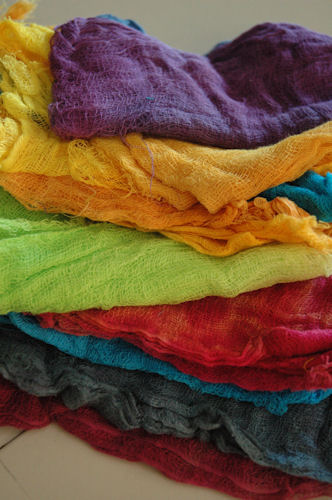
Soft Furnishing Fabrics – Cheesecloth

Cheesecloth takes it name from the function it was originally used for – namely wrapping cheese. It's a lightweight cotton which is loosely woven and isn't really substantial or strong enough to make soft furnishings; although it can be used successfully for making mosquito nets and bed canopies, along with lightweight curtains.


For those who remember back to the 60s and 70s cheesecloth was made into shirts and was highly fashionable!

Image: ~Merete

Thursday

Soft Furnishing Fabric – Serge

Serge is a twill fabric that has a characteristic diagonal ridge on both sides of the fabric. The worsted variety of serge is used for making coats and military uniforms; while silk serge is used for making linings for clothing and possibly curtains.


Denim is believed to have got its name from a cotton fabric with a similar weave know as 'serge de Nimes' after the town Nimes in France.


Image: SewPixie

Wednesday

Soft Furnishing Fabric – Tweed

Tweed is a coarse woollen fabric mostly used for making clothes. With the interior design trend to add more texture in our homes tweed is being seen as a fabric for making stylish curtains along with being an ideal fabric for upholstery. It's durable and hard wearing making it ideal for many soft furnishing projects.


It can also be seen as a covering for vintage amplifiers, for example Fender Tweed. There are many different types of tweed which are given specific names depending where it is manufactured and/or the colour; for example Harris Tweed and Donegal Tweed.

Image: Chair and curtains - Blythswood Tweed -The Croft

Tuesday

Soft Furnishing Fabric – Wool

Pure wool is soft to touch, particularly when the wool fabric is made from angora or cashmere wool. Typically sheep's wool is made into yarn by spinning and then weaving. It's a natural fibre and therefore bodes well with anyone who wants to use only natural materials in their home.


When the wool yarn is spun finely it can be woven into fabric to make high quality soft furnishings Which are robust, durable and have longevity, making it a perfect choice for items such as bedding blankets and throws.

Image: H is for Home

Friday

Soft Furnishing Fabric – Chenille

Chenille is the French for caterpillar and the fabric derives its name from this, one assumes because the fabric resembles caterpillars. It's given the name chenille because of the technique from which it's made.

It's made by placing two short lengths of yarn (pile) between two core yarns and twisting them together to make one yarn – chenille. The edges of the pile (tuft) stands on end at the junctions of the two yarns which give chenille its unique look. The technique can be used to create chenille from cotton, rayon and acrylic.

Chenille has been used to make bedspreads, throws and quilts since the 1930s when the industry became a lucrative one with fabric merchants setting up cottage-like industries (spread houses) where families were given chenille sheets to tuft which turned them into bedspreads. Chenille patchwork throws and bedspreads are still being made using the tufting technique.

Image: actionhero

Today you may be more familiar with chenille as a fabric or yarn used for making clothes; it's also used for many soft furnishing fabrics and can be found in cushions, bedspreads, throws, quilts and even curtains.


Image: kightp

Thursday

Soft Furnishing Fabric – Rayon

Believe it or not rayon is one of the oldest man-made fibres; it's production began in France in 1880s as an alternative to silk. The ability to mass produce cheap fabric made rayon a household name and its still used to day as a cheap substitute for silk and cotton. Technically speaking ray isn't a man-made fibre as it derives from naturally occurring cellulose, but since cellulose requires numerous production techniques to make rayon it's classified as a man-made fibre.


This soft fluid fabric is typically used in the clothing industry, however, as it's a substitute for silk and cotton it can also be used to make soft furnishings, including curtain lining or as an alternative other soft furnishing that can be made using silk or cotton.

Image: saraicat

Tuesday

Soft Furnishing Fabrics – Jersey

The fabric was given its name as originally it was made on Jersey (one of the Channel Islands). It's made predominantly from cotton and used in the clothing industry to made tee-shirts. Jersey has a natural stretch which makes it difficult to work with when making soft furnishings. The use for Jersey within interior design is limited, however, it's can be used to provide another tactile dimension and is beginning to be seen when used for make soft furnishings from recycled materials.


Due to the stretch of the fabric it isn't suitable for making curtains, drapes or Roman blinds, but it could be used as part of a patchwork.

Image: lisaclark

Monday

Soft Furnishing Fabrics – Flannel

Flannel is usually a blended fabrics made up from wool, cotton and/or synthetic polyester. It's renowned for its warming properties that's why is made into night clothes as well as blankets, bed sheets and pillow slips.

You can get brushed or un-brushed flannel, the former giving a soft touch. Flannel also comes as single or double napped, double nap flannel being brushed on both sides. Due to its warmth flannel was commonly used for bedsheets, I remember my grandmother having flannel sheets on the beds and I have to admit it was snugly warm once under the covers – the was no central heating in those days, so it was a matter of just leaving the top of your exposed during the really cold months!


You can still get flannel or flannelette sheets and bedding – not only is it warming it's also very durable and hard wearing.


Image: Melaine O

Friday

Soft Furnishing Fabrics – Longcloth

A pure cotton fabric longcloth is slightly thicker than poplin. The term longcloth is also used for unbleached cotton fabric; you may not be familiar with the term as it is typically used to describe fabric which is made in India. It's usually used for making high quality shirts and baby's clothing as it is incredibly soft.

With regards to interior design and soft furnishings it may be a fabric you wish to use for lightweight curtains, rather than using the more traditional net curtains or voiles. However, the highest quality longcloth can be very expensive and there are plenty of alternative fabrics available for making soft furnishings.

Image: faun_haert

Thursday

Soft Furnishing Fabrics – Mulmul

Mulmul is a fine soft cotton fabric which has been used for centuries to make clothes and lightweight coverings for windows. This beautiful fabric is used for making saris and today can also be used as soft, colourful fabric for window dressings, throws and cushion covers. Due to the fineness of the cotton it can be difficult to work with, however, the end results are well worth the aggravation.


Mulmul can be dyed and also printed; it's a fabulous fabric if you want to make a stylish bed canopy or use it in place of voiles at your windows.

Image: Dan.be

Wednesday

Soft Furnishing Fabrics – Lawn

Lawn is a textile with a plain weave. It has a high thread count which makes it feel soft and silky smooth. Predominately used for making clothes lawn was originally made from linen, but nowadays it's mainly cotton.

Lawn can be used to make curtains and draperies that are fluid; lawn is slightly thicker than voile and is semitransparent. It can be plain coloured or patterned. Lawn is also used for fabric lining.


Nainsook is the term given to lawn fabric which is made from using combed yarns; nainsook has a soft and silky feel which is prefect for making lingerie.

Within the textile industry fabrics which have a starched crisp finish are also known as lawn.

Image: Jaypeg

Tuesday

Soft Furnishing Fabrics – Khadi

This fabric is not solely about the fabric itself, it's about a movement which uses hand-woven and hand-spun cloth from India and Pakistan. The material used to make Khadi include cotton, silk and wool which are spun into a thread using a charkha spinning wheel. As the fabric is cruder in form than other natural materials it wrinkles easier than other types of cotton; to improve the overall look khadi is often starched to give it more body and substance. The fabric is versatile and renowned for its ability to keep people cool in the Summer and Warm in the Winter.


Khadi is typically used for making clothing, however, if you want to only use natural raw materials and fabrics which are hand-made it would be possible to use khadi for lightweight soft furnishings projects; if the starched version of the cloth is used it would be possible to use it as a fabric covering for walls in place of wallpaper.


Image: verseguru

Sunday

Soft Furnishing Fabrics – Faux Fur

Fur faux, as the name suggests, is imitation fur fabric made from polyester. Renowned for it's ability to look similar to genuine furs it's the ideal fabric to make luxury throws and soft furnishings without having the death of an animal on your conscious.

Luxury Faux Fur Throws

Animal prints are very trendy, being used for home décor and clothing. Faux fur is available in a wide range of colours and prints, including animal prints. Its soft touch makes it ideal for bedding and is also perfect for using as a throw for your favourite sofa or chair.

For those who love sewing it's easy to make cushion covers and decorate soft furnishings with this animal-friendly fabric.

Image: Wickerfurniture

Friday

Soft Furnishing Fabrics – Fleece, Natural and Man-made

Fleece is a man-made fabric; it's made from polyester and is renowned for its soft pile and feel. Within the world of interior design fleece is used to make throws, cushion cover and blankets. It's warm insulation properties offer a lightweight, snugly fabric which is easy to maintain and care for. Most fleece fabrics can be machine washed and tumble dried. The latest fleece is called micro fleece and offers a soft touch fabric perfect for baby bedding and bed throws.


Natural fleece comes from sheep and goats wool. It's the name given to the thick hair which is shorn off the animal. It can be made into sheepskin rugs, or the wool goes through numerous processes to make fibre for weaving or knitting. Clothing and textiles are the main use for natural wool which can be used to create luxury bedding, upholstery fabric and fabric for making clothes.

Luxury angora goats fleece is ideal for making high quality throws.

Image: ...love maegan

Image: athenamat

Thursday

Soft Furnishing Fabrics – Corduroy

Corduroy is a fabric which has distinctive lines of parallel lines made from twisted cords. It can also be described as a ridged form of velvet. The width of the cords are know as 'wale' – which equates to how many ridges there are per square inches of cloth. The lower the number of 'wale' the thicker the width of the 'wale'...all sounds rather complicated to the layman.


It's used for making hard wearing clothes and can also be used for making soft furnishings such as cushions, curtains and Roman blinds and can also be found in upholstered sofas and chairs.

With the trend for introducing more tactile fabrics and materials to our homes corduroy is an effective and inexpensive way to add style to your rooms.

You may also know corduroy simply 'cord' or 'Manchester'.

Image: javi.velazquez

Wednesday

Soft Furnishing Fabrics – Chiffon


Chiffon is a plain lightweight fabric which can be made from silk or cotton. This sheer fabric's name is from the French for cloth or rag and is typically used in making clothes rather than soft furnishings. However, with the increase in popularity of using sheer lightweight fabrics for curtains or bed canopies chiffon is being used to create these fluid, semitransparent window dressings and sensuous drapes for beds.

Image: Simon Blackly

Tuesday

Soft Furnishing Fabrics - Jacquard

Jacquard cloth is made on a fabric loom and can include damasks, brocades and tapestries. It works on the principle of using cards which have holes punched in them; each of the holes correspond to a hook on the loom which is picked up and guided to the warp or weft threads to create the pattern.


Jacquard looms were the first to use cards to perform a series of operations to create a textile or fabric. Today most textiles are produced using computer, however, the Jacquard loom is seen as an important role into the first computer programmes and the mass production of fabrics.

Jacquard fabric by nature of the way it is made is durable and versatile, it;s the perfect material choice for many soft furnishing and can be used to make curtains, Roman blinds etc.

Image: seamlessgem

Image: ghwpix